
Dev Journal #4: Gameplay First, Lore Second
How four decks of cards became the factions of Daandria
https://store.steampowered.com/news/app/3345260/view/677388608747864413 Stardock Forums
Dev Journal #4: Gameplay First, Lore Second
How four decks of cards became the factions of Daandria
Now, you might expect that we started by imagining the different cultures and organizations of Daandria, and then designed factions around them.
Actually, it was pretty much the other way around.
As we explained in our first journal, Empire in Decay originally featured different decks of cards that players could gradually unlock as they progressed through the game.
Each deck was built around a particular style of play.
We had ideas for decks focused on direct attacks, others based on bleeding and status effects, some involving mechanical units and drones, and others exploring healing, poison, and more unusual abilities.
At that point, these were primarily gameplay concepts. We were looking for different ways to approach combat, rather than trying to represent specific groups within the game's world.
But as development continued, we started wondering whether it would make more sense to give those different playstyles their own identities.
Instead of having a collection of decks that players unlocked one after another, what if each one belonged to a distinct faction, with its own characters, visual style, and place in Daandria?
We also liked the possibility of having factions complement each other, allowing players to combine their different strengths and experiment with them in pairs.
That decision opened up a lot of interesting possibilities.
Suddenly, the mechanics weren't just mechanics anymore. They suggested different kinds of people, organizations, and ways of understanding the world.
And that's when the lore started becoming closely connected to the gameplay.
Four Different Ways of Facing the Chessboard
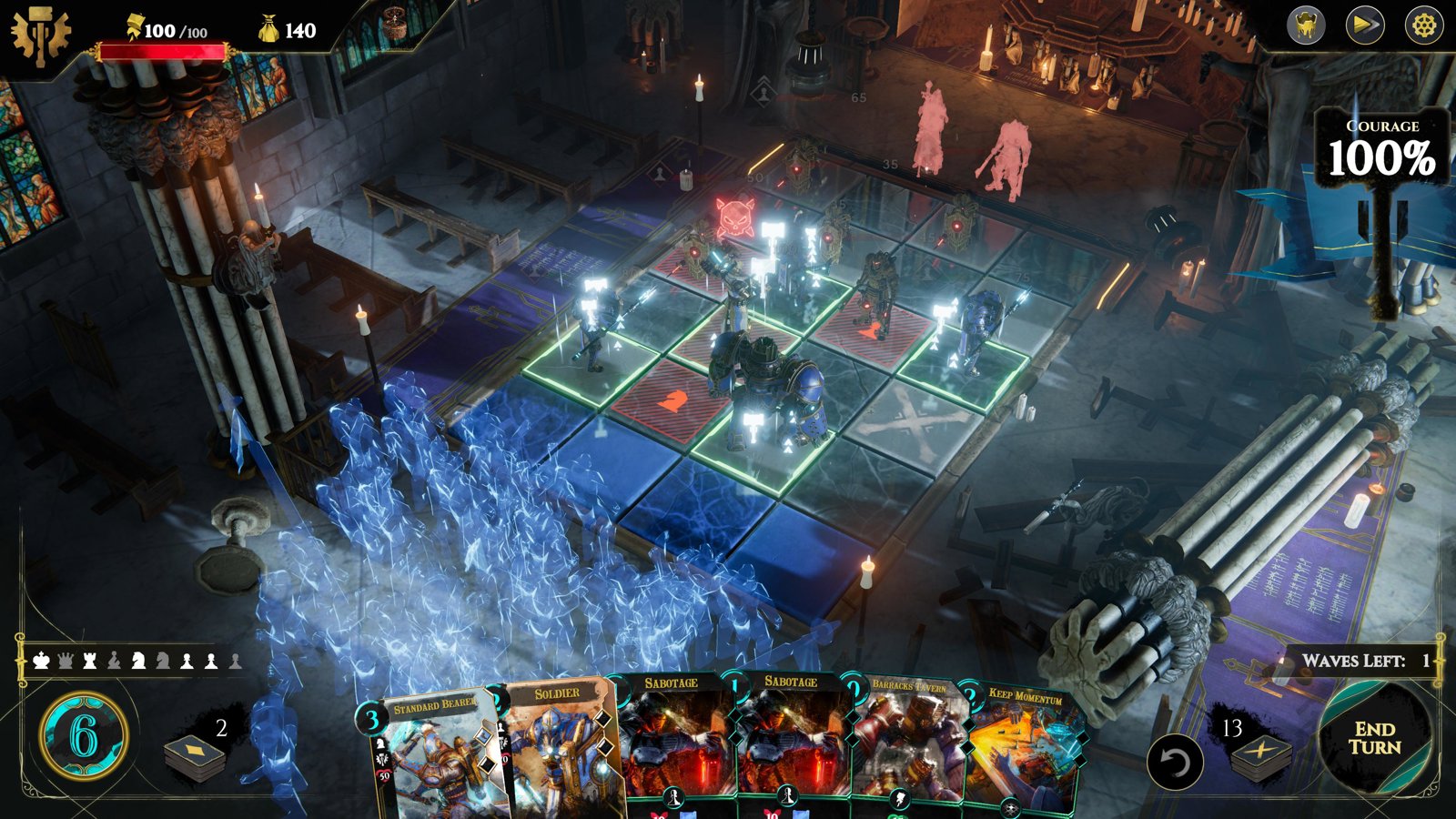
This process eventually led us to our four playable factions: the Damerites, the Guild, the Groundbreaking Society, and the Soul Harvesters.
They began with different mechanical identities, but we wanted them to feel like they belonged to the same world.
The Damerites grew around the idea of direct, aggressive combat. They represent a more martial approach, relying on strength and decisive action rather than elaborate tricks.
The Guild on the other hand, developed from mechanics involving bleeding and other debilitating effects. That suggested a rather different kind of organization, one more comfortable with exploiting weaknesses and using less conventional methods.
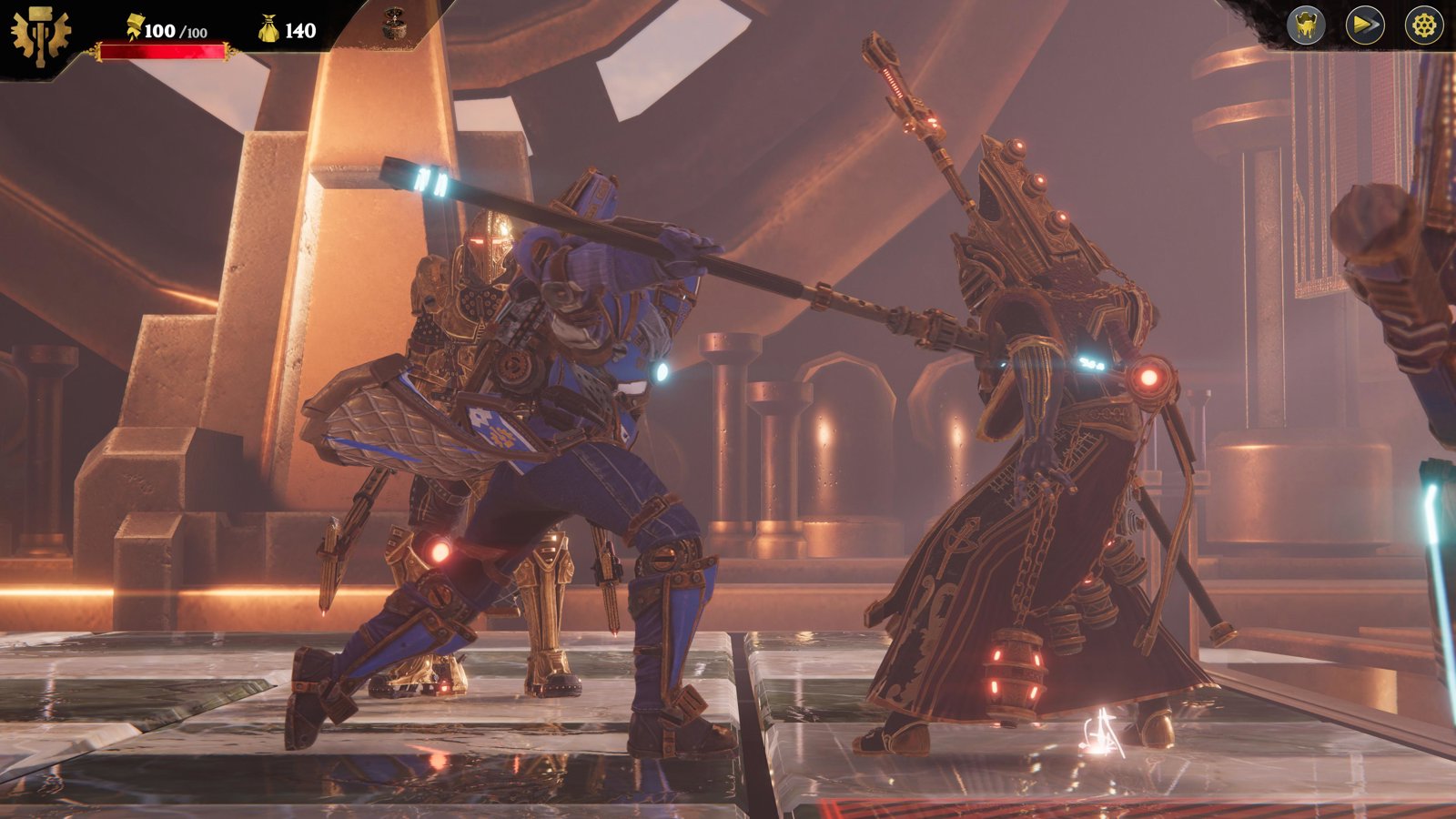
With the Groundbreaking Society, we had an opportunity to explore mechanical units, drones, and technology. They also fitted naturally into the industrial side of Daandria, where strange inventions and machinery have become part of everyday life.
And then there are the Soul Harvesters, whose abilities revolve around things like poison, healing, and manipulating the forces of life and death. They gave us a chance to explore the more disturbing supernatural and religious aspects of the setting.
Of course, there's considerably more to each faction than that.
We've been developing their backgrounds, their place in the city, their motivations, and their relationships with the rest of Daandria. And some of those stories have become quite elaborate.
But I think the interesting part, at least from a development perspective, is how the process worked in both directions.
A particular mechanic could suggest an idea for a faction's identity. Then, as we developed that identity, it might suggest new visual designs, characters, or even additional gameplay possibilities.
It wasn't a matter of designing the lore first and then finding mechanics to represent it, or the other way around.
The two gradually started influencing each other.
And I think that helped make the factions feel like something more than four different decks of cards.
Different Factions, Different Perspectives
Another aspect we wanted to explore was the idea that these factions don't necessarily share the same vision of what Daandria should become.
After all, living under the same oppressive regime doesn't mean everyone has the same interests, or that they would agree about what should replace it.
That's something we find particularly appealing about the setting.
Daandria is a city full of contradictions, and its inhabitants are no exception.
There are people who benefit from the current situation, people who suffer because of it, and people who see the empire's decline as an opportunity.
Some might genuinely want to make things better. Others may have rather less noble motivations.
And sometimes those interests overlap in unexpected ways.
We don't want to give away too much about the factions and their stories just yet, but we do want players to feel that they're dealing with different groups of people, each with their own reasons for getting involved in the events unfolding across the city.
A City With Stories to Tell
One of the things I've enjoyed about developing Daandria is how the setting has gradually grown beyond what we originally needed for the game.
A district suggests a particular kind of architecture. That architecture raises questions about who built it and why. Those questions lead to ideas about the people who live there, their history, their traditions, and the conflicts between them.
And before you know it, what started as a location for a few battles has become a place with a much larger story behind it.
Naturally, not all of that background needs to be explained directly to players. In fact, I think it's often more interesting when some of it remains in the background, giving the world a sense of history without constantly stopping to explain everything.
There's still plenty we'd like to share about Daandria, its districts, the factions, and the rather peculiar characters who inhabit them.
But for now, I hope this gives you a better idea of the world we're trying to create.
A once-great empire that has become trapped in its own past, a city that seems incapable of changing, and a collection of very different people who might, for better or worse, end up changing it anyway.
And somewhere in the middle of all that, a rather unusual game of chess.
See you in the next dev journal!