
Dev Journal #2: Too Much Chess?
How we stopped making chess and starting making our own game.
https://store.steampowered.com/news/app/3345260/view/674008896091720990 Stardock Forums
Too Much Chess?
How we stopped making chess and starting making our own game
Our games were taking forever.
As it turns out, combining a full chess match with dozens of cards and special abilities isn't exactly the best recipe for a quick, dynamic experience.
We liked the tactical possibilities, but we really didn't want players to spend an eternity finishing every battle.
There was another issue, too: teaching the computer opponent to use its own cards intelligently was proving to be quite a challenge.
So we started wondering whether we really needed to stick so closely to traditional chess in the first place.
Around that time, we were playing and discussing other deckbuilding games, particularly Monster Train, and we really liked the way it structured its battles.
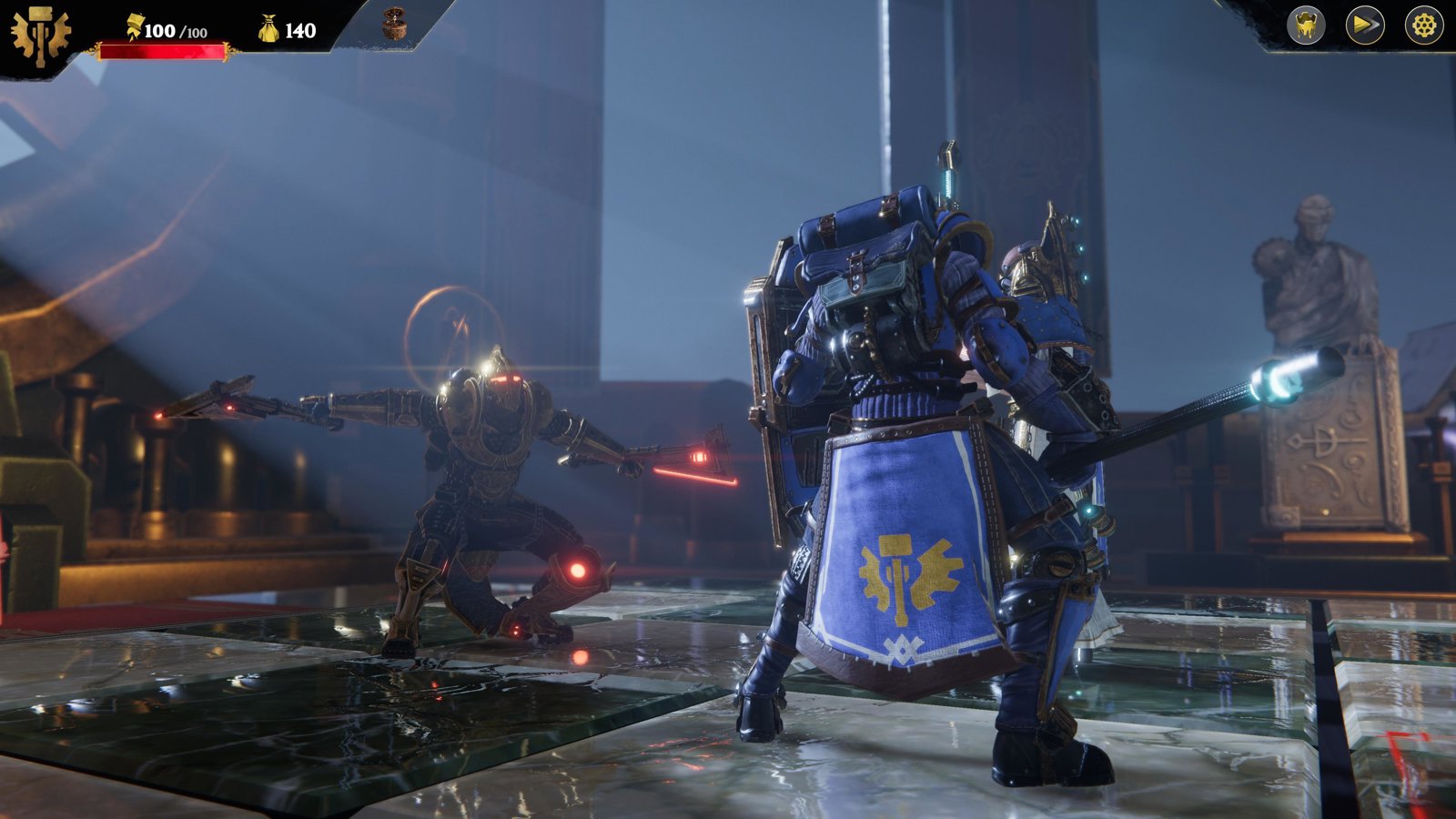
In Monster Train, enemies advance through your train in successive waves, and you have to deploy your units and use your cards to stop them before they reach their destination.
What if we tried something similar on a chessboard?
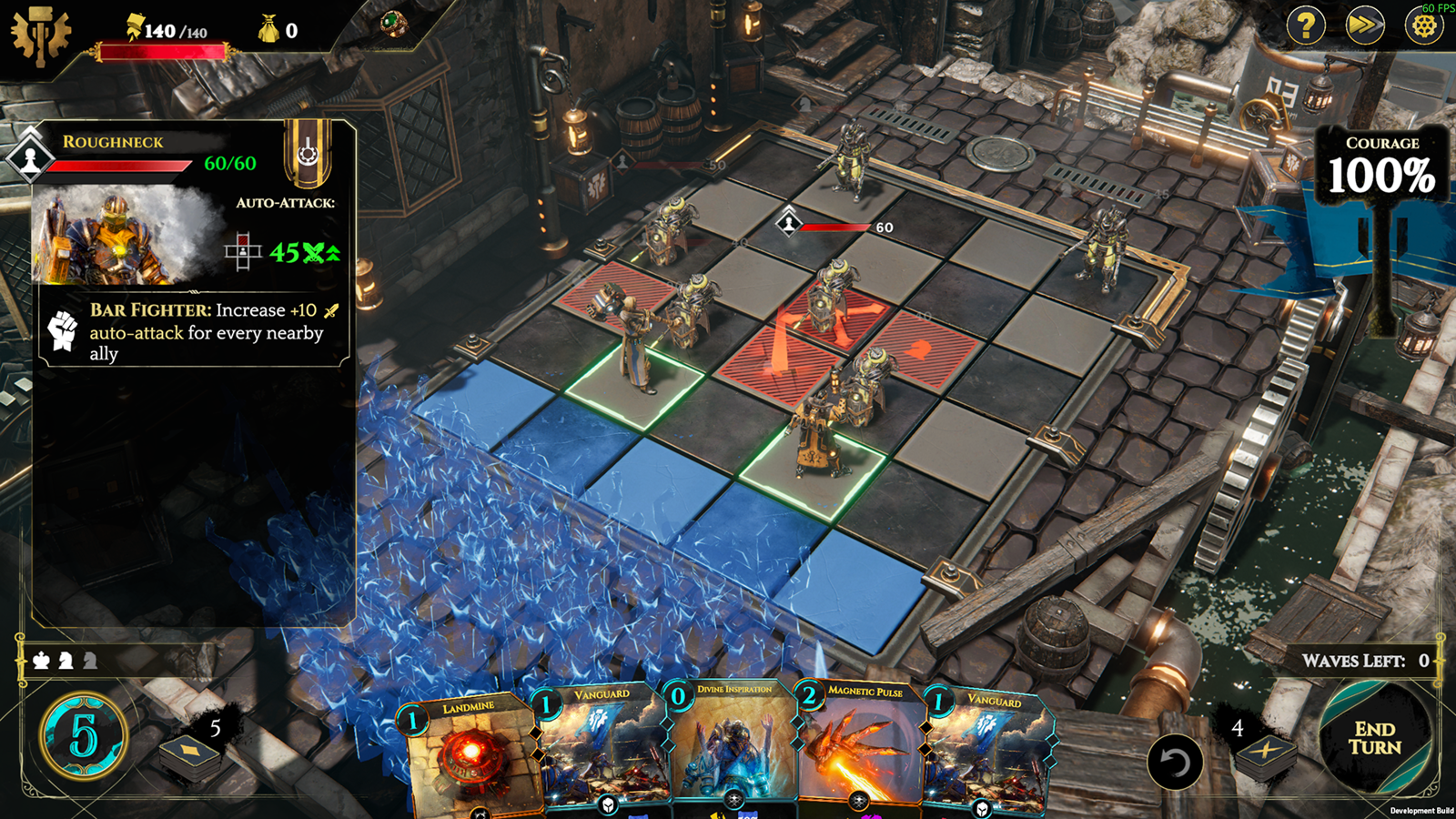
Instead of two equal armies facing each other, what if enemies appeared in waves, advancing relentlessly across the board, while the player summoned a smaller force to try to stop them?
We started experimenting with the idea, and it gradually changed the way we thought about the entire game.
We no longer needed a complete army of sixteen pieces on each side. We could have smaller groups of units, different kinds of enemies, and battles built around surviving against overwhelming numbers.
It also gave us something we'd been missing in the original concept: a much stronger sense of urgency.
The enemy was coming, whether you liked it or not.
And suddenly, our chess game was beginning to feel like something quite different.
Finding Our Own Game
Once we moved away from traditional chess matches, a lot of new possibilities opened up.
We began looking more closely at games such as Slay the Spire, Monster Train, and Fights in Tight Spaces, trying to understand how they handled tactical decisions, combat pacing, and the information available to players
There were plenty of things we wanted to experiment with, but one idea gradually became central to our design.
We wanted players to feel that they were facing impossible odds, but that with clever decisions, careful positioning, and good use of their available resources, they could somehow come out on top
That feeling of being outnumbered, of watching enemies advance while you desperately try to figure out how to stop them, became one of the defining elements of Empire in Decay.
And just as importantly, we wanted the opposite feeling: the satisfaction of finding a particularly clever combination of moves that turns a seemingly hopeless situation into a victory.
We also realized that we needed to be careful about how we presented information. If we were going to ask players to make difficult tactical decisions, we had to give them the tools to understand what was happening on the board.
Some of these questions took quite a bit of experimentation, and others are things we continue working on.
But gradually, we were no longer trying to make traditional chess more spectacular.
We were making our own game.
From Chess to Empire in Decay
Looking back, I think there were two decisions that really changed the direction of the project.
The first was introducing cards into chess, giving players the ability to alter its familiar rules and discover new tactical possibilities.
The second was abandoning the idea of two complete armies fighting a conventional match, and replacing it with a much more asymmetric battle against successive waves of enemies.
From there, adopting a roguelike structure made a lot of sense. It allowed us to introduce progression, new challenges, and more opportunities to experiment with different strategies.
Over time, we added new factions, mechanics, heirlooms, and plenty of other ideas that helped Empire in Decay develop its own personality.
Some of those systems deserve their own dev journals, and we'll certainly have a lot to talk about in future entries.
But what I find amusing is that, after all these changes, there's still quite a bit of chess at the heart of the game.
You're still looking at a board, thinking about positioning, anticipating enemy moves, and trying to make the most out of the pieces you have available.
It's just that now there are a lot more enemies than you'd normally expect, the rules aren't always quite what they seem, and you have a few tricks up your sleeve.
Not exactly the Battle Chess successor we originally had in mind, but we're quite happy with where the idea has taken us!